
No Surprises Act · Federal IDR

Kronos Revenue

Insurers underpay out of network surgical claims.
The No Surprises Act gives you the right to dispute every one.

Providers who file federal IDR correctly win 88% of disputes, yet most surgical practices never file.

Kronos Revenue handles every NSA IDR claim end to end. One claim per CPT, specialty coded, quoted to your volume.

New to federal IDR? Start with the filing checklist before you initiate a dispute.

Download the NSA IDR checklist

Built by a surgeon who watched his own practice lose money to this.

I am a practicing neurosurgeon. I built Kronos Revenue because I watched surgical practices, including mine, lose significant revenue to two specific problems.

The first: most out of network claims that should go to federal IDR never get filed. Each submission takes 30 minutes. Billing teams do not have that time at scale. So the insurer underpayment becomes the accepted rate. The money disappears quietly.

The second: practices that do file are paying attorneys 20% of every recovery. In exchange, most attorneys batch CPT codes, a shortcut that reduces arbitration outcomes and that a 2023 federal court ruling confirmed was contrary to how IDR was designed.

The federal data is not ambiguous. Providers win 88% of properly filed IDR disputes. Median awards come in at approximately 4.5 times the insurer qualifying payment amount. Georgetown CHIR, March 2026. The money is there. The system works when it is used correctly.

Kronos Revenue uses it correctly.

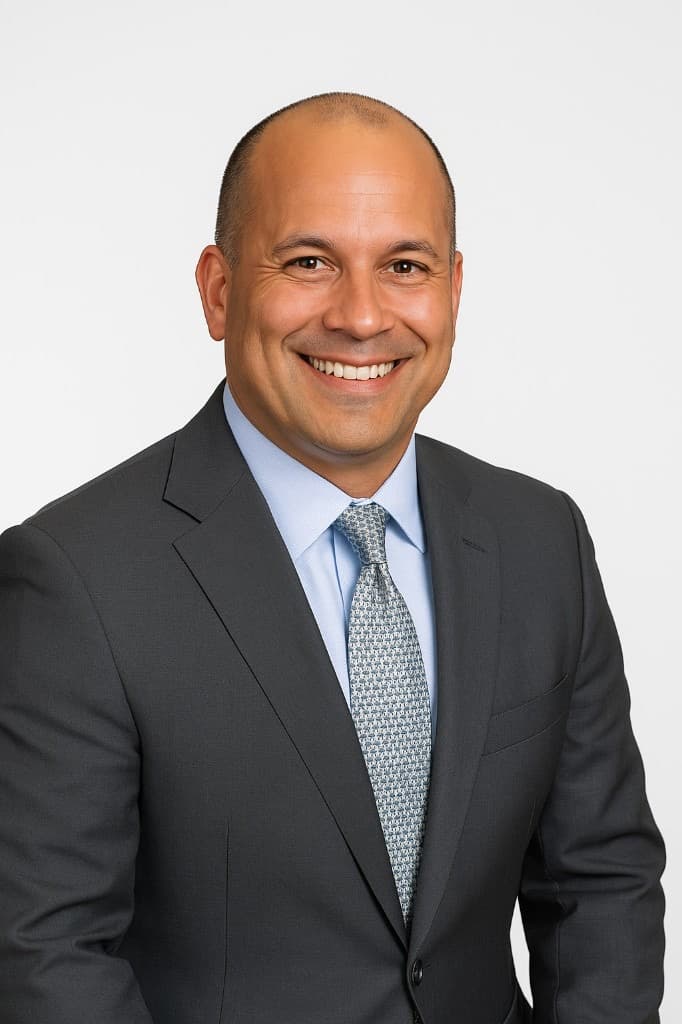
Dr. John M. Abrahams, MD, Board Certified Neurosurgeon, Founder, Kronos Health

Dr. John M. Abrahams, MD, board certified neurosurgeon and founder of Kronos Health

What 20% of every award actually costs over time.

A spine surgery practice recovering $300,000 per year in NSA IDR disputes pays $60,000 annually to a 20% contingency attorney. Over five years: $300,000 in attorney fees. Before counting the disputes the attorney lost from batching CPT codes. Kronos Revenue charges a consultative fee quoted to your volume. Not a percentage of every recovery. Most practices keep roughly nine in ten dollars won at IDR after our fee. Run your own numbers below.

Recovery Calculator

What 20% of every award actually costs over time.

Uses CMS published win rates (88%) and Georgetown CHIR median award benchmarks. Not a Kronos performance claim.

10
1 / month100 / month

Assumes 88% win rate (CMS Q1/Q2 2025 Public Use File), 3 hrs manual submission vs 15 min with Sydra, $65/hr billing specialist rate. Recovery estimate based on disputed amount midpoints. Not a guarantee of results.

Annual recovery potential

$4.0M

120 cases × 88% win rate × $25K – $50K

Annual cases

120

eligible to file

Hours saved

330 hrs

vs manual

Labor saved

$21K

in billing time

Ready to start recovering?

Get a free NSA IDR review — no commitment.

Get a free NSA IDR review

Federal IDR statistics

  • 88%

    Provider win rate at federal IDR

    CMS Q1/Q2 2025 Public Use File · January 2026

    View source
  • 87%

    of IDR awards exceeded the insurer qualifying payment amount

    Same source

    View source
  • ~4.5x

    Median provider award vs. in network rate

    Georgetown CHIR · Health Affairs · March 2026

    View source
  • $2.2B

    Provider IDR recoveries above in network rates through 2024

    Brookings Institution · April 2026

    View source
  • ~10%

    Estimated share of eligible claims actually being filed

    ACEP analysis of CMS data

    View source

Why attorneys lose IDR cases.

The most common reason surgical IDR disputes fail is not weak documentation. It is incorrect filing structure.

Federal IDR rules require each CPT code to be filed as a separate dispute.

When an attorney batches CPT 27447 (total knee arthroplasty) with 27369 (injection, knee) into one IDR submission, the arbitrator reviews two procedures with different market rate benchmarks and different qualifying payment amounts. The submission does not map cleanly to any prior determination. Arbitrators resolve that ambiguity against the initiating party.

A 2023 federal court ruling, Texas Medical Association v. HHS, Eastern District of Texas, specifically found that improper batching was forcing providers out of IDR recovery they were legally entitled to pursue.

Kronos Revenue files one claim per CPT. Every time.

Which of these describes your practice right now?

We are not filing IDR at all.

You are accepting the insurer initial payment on every out of network claim. For a practice with 15 out of network surgical claims per month, the unfiled gap is likely six figures annually. Kronos Full-Service handles every claim. Zero biller time on IDR.

Get a free IDR review — we show you the number.

We want to run IDR in house.

Your billing team wants to control the workflow and keep all recoveries in house. Sydra is the software platform. Under 5 minutes per claim instead of 30.

See Sydra

Part of Kronos Health

Sydra is the software. Kronos Revenue is the full service team.

Kronos Health builds two products from the same specialty trained foundation. Sydra is the software your billing team operates in house. Kronos Revenue is the team that handles every claim when you want zero biller time on IDR. Same CPT depth, different operator.

Scroll horizontally to compare

Comparison of NSA IDR handling by attorneys versus Kronos Revenue
 Your attorneyKronos Revenue
Fee model20% of every recoveryQuoted to your volume — most practices keep roughly nine in ten dollars won
Specialty depthGeneralist — IDR is a side practiceSpecialty trained: ortho / neuro / spine / plastics
Filing approachOften batches CPT codesOne claim per CPT — the way IDR was designed
Who's on the fileJunior associatesRCM specialists trained by Dr. Abrahams (surgeon founder)
CommunicationQuarterly, if you're luckyLive 9–5 M–F, 24 hr email, monthly review
What you keep per dollar wonAbout eighty cents — after the 20% contingencyAbout ninety cents or more — quoted to your volume, not skimmed from every award
Total practice savings20% fee on fewer won IDR disputesGreater share of every award — plus more disputes won at IDR

What you actually get on a free IDR review.

This is not a sales call. Here is what happens.

  • You send us 3 to 5 recent EOBs for out of network claims.
  • We review CPT codes, disputed amounts, and filing eligibility.
  • We calculate estimated recovery if those claims had been filed at IDR.
  • We show what you recovered, what you left on the table, and the difference under Kronos versus your current arrangement.
  • The review takes one business day. If the math does not favor switching, we tell you that. No contract on the first call.

Request your review

Fields marked with * are required.

Loading form…

The data, sourced.

Providers won 88% of federal IDR disputes in the first half of 2025. 87% of award amounts exceeded the insurer qualifying payment amount.

CMS Federal IDR Q1/Q2 2025 Public Use File · January 21, 2026 · cms.gov

In 2.5 years through 2024, providers recovered more than $2.2 billion from the NSA IDR process relative to applicable in network payment rates.

HFMA citing Brookings Institution NSA Arbitration Databook · October 2025

The median provider win at IDR represents approximately 4.5 times the in network rate.

Georgetown University CHIR · Health Affairs · March 2026

Sydra reference library: 213+ ingested IDR determinations, over 90% provider wins, weighted toward spine and orthopedic CPT codes. Library statistics describe determinations ingested, not a guarantee of future results.

Questions about NSA IDR

What is No Surprises Act independent dispute resolution?
The No Surprises Act established a federal Independent Dispute Resolution process allowing out of network providers to dispute underpaid claims against insurers. An independent certified IDR entity reviews both payment offers and issues a binding determination. Providers won 88% of IDR disputes in the first half of 2025, with 87% of award amounts exceeding the insurer qualifying payment amount, per CMS data released January 2026.
Why use Kronos Revenue instead of an attorney for NSA IDR?
Attorneys take 20% of every IDR recovery as a contingency fee, leaving providers roughly 80 cents on the dollar. Kronos Revenue quotes a consultative fee to your volume. Most practices keep approximately 90 cents or more per dollar won. Kronos files one claim per CPT code, the way federal IDR was designed, while generalist attorneys frequently batch codes in ways that reduce arbitration outcomes.
Which surgical specialties does Kronos Revenue serve?
Kronos Revenue handles NSA IDR for orthopedic surgery, neurosurgery, spine surgery, plastic surgery, anesthesiology, and general surgery. Every federal IDR submission is prepared by a specialist trained in your CPT code set.
How long does the NSA IDR process take?
After open negotiation ends without agreement, either party has 30 business days to initiate IDR. The certified IDR entity has 30 business days to issue a payment determination. Kronos Revenue targets under 5 business days from EOB receipt to IDR portal submission.
What states does Kronos Revenue support?
Kronos Revenue actively serves practices in Texas, California, New York, New Jersey, Florida, and Arizona. In states with bifurcated billing laws including TX, NY, CA, NJ, and FL, state law may govern disputes involving fully insured state regulated plans. Kronos Revenue navigates both federal and state pathways.

Get a free NSA IDR review

Free. One business day. We run the math on your actual EOBs. No commitment.